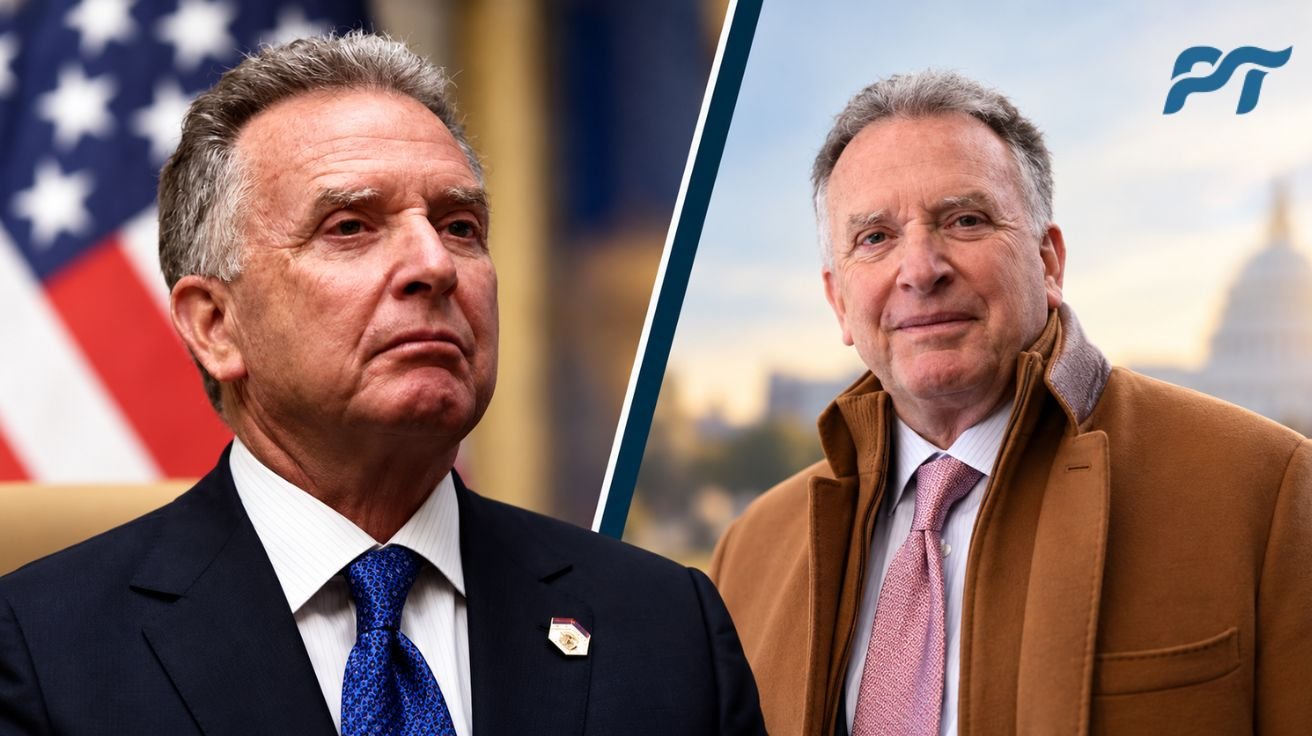
Steve Witkoff is an American billionaire real estate developer, former attorney, and one of President Donald Trump’s most influential diplomatic representatives. With an estimated net worth of $2.4 billion in October 2026, he spent four decades building a property empire before entering international diplomacy. His assignments now involve some of the world’s most difficult conflicts, including negotiations concerning Gaza, Ukraine, Russia, and Iran.
The 69-year-old businessman has taken an unconventional route to global politics. From purchasing apartment buildings in New York to negotiating with Russian President Vladimir Putin, Witkoff has relied on personal relationships and direct negotiations throughout his career. His story includes major property deals, a decades-long friendship with Trump, family tragedy, and diplomatic achievements that have also attracted intense political scrutiny.
Quick Facts
| Field | Details |
|---|---|
| Full Name | Steven Charles Witkoff |
| Date of Birth | March 15, 1957 |
| Age | 69 years old (October 2026) |
| Birthplace | The Bronx, New York City, USA |
| Nationality | American |
| Parents | Martin and Lois Witkoff |
| Siblings | Robert, Amy, and Susan Witkoff |
| Education | BA (1980) and JD (1983), Hofstra University |
| Spouse | Married Lauren Jill Rappoport in 1987 |
| Children | Alex, Zach, and Andrew Witkoff |
| Estimated Net Worth | $2.4 billion (October 2026) |
| Main Business | Founder and Chairman, Witkoff Group |
| Government Position | U.S. Special Envoy to the Middle East and for Peace Missions |
Steve Witkoff’s Early Life, Parents, and Siblings
Steven Charles Witkoff was born on March 15, 1957, in the Bronx, New York City. He grew up in Baldwin Harbor and Old Westbury on Long Island, where his family established a comfortable life outside Manhattan. His parents, Martin Witkoff and Lois Birnbaum Witkoff, were important influences during his childhood. His father worked in the women’s clothing industry and served as president of the manufacturing company George Simonton Inc.
Witkoff grew up with three siblings: Robert, Amy, and Susan Witkoff. His upbringing included close family relationships and an early interest in business. He later described his father as an important mentor who encouraged him to develop independence, work hard, and pursue opportunities beyond conventional employment.
Although his eventual fortune came from commercial property investments, his business ambitions began much earlier. Growing up near New York City exposed him to a competitive environment shaped by finance, construction, law, and entrepreneurship. Those interests eventually led him toward a legal career and, later, property ownership.
Education and His Early Career as a Lawyer
Witkoff initially attended Union College in Schenectady, New York, before transferring to Hofstra University on Long Island. He earned a Bachelor of Arts in political science in 1980 and continued studying law at the same institution. In 1983, he graduated from Hofstra Law School with a Juris Doctor degree and was admitted to the New York bar in 1984.
His legal career began at Dreyer & Traub, a prominent Manhattan firm that represented major property investors and developers, including Donald Trump. Witkoff later worked at Rosenman & Colin, gaining further experience in real estate transactions, commercial negotiations, and property financing.
Working closely with wealthy developers changed his professional ambitions. He saw how investors could profit from acquiring buildings, improving properties, and negotiating favorable financing. Instead of remaining an attorney who handled other people’s transactions, he decided to become an investor himself.
How Steve Witkoff Started His Real Estate Business
In 1985, Witkoff joined fellow attorney Larry Gluck to establish a real estate investment partnership that became Stellar Management. Their early properties were modest apartment buildings in northern Manhattan and the Bronx. One of their first investments was a 24-unit building in Inwood, purchased for approximately $240,000.
Each partner contributed around $20,000 toward the down payment, with Witkoff borrowing his share from his father. The investment eventually produced a profit of approximately $50,000, encouraging them to purchase additional buildings. They operated with limited resources, personally handling maintenance problems and collecting rent when necessary.
During the early 1990s, the partners expanded beyond residential properties into distressed commercial buildings. Manhattan’s struggling real estate market presented opportunities to acquire office towers at deeply discounted prices. By the middle of the decade, Witkoff was negotiating larger transactions backed by institutional lenders.
In 1997, he founded the Witkoff Group, establishing his own investment and development company. His partnership with Gluck ended the following year, with Gluck concentrating on residential holdings and Witkoff pursuing commercial properties and development opportunities. An attempted public offering in 1998 was abandoned amid financial market turmoil, but the business continued operating privately.
Major Properties, Landmark Deals, and Business Achievements
The Witkoff Group became associated with some of New York City’s most recognizable buildings. Its strategy involved acquiring valuable or financially troubled properties, restructuring investments, securing tenants, and developing higher-value uses. The company eventually expanded into luxury residences, hotels, resorts, and golf clubs.
One of its most important transactions involved the Woolworth Building in Lower Manhattan. The acquisition was announced in June 1998 at $155 million, but the purchase price was later renegotiated to $137.5 million before closing. In 2012, Witkoff and his partners sold the building’s upper floors for approximately $68 million, allowing their conversion into luxury residences while retaining the commercial portion.
His investment history also includes several ambitious projects that faced financial and market challenges. The Park Lane Hotel became connected to the international 1MDB financial scandal through investor Jho Low, while an unfinished Las Vegas casino development was disrupted by financing difficulties and the COVID-19 pandemic.
| Property | Location | Deal Value | Major Development |
|---|---|---|---|
| Woolworth Building | Manhattan, New York | $137.5 million final purchase in 1998 | Restoration and sale of upper floors for residential conversion |
| Daily News Building | Manhattan, New York | $138 million acquisition in 1996 | Major commercial office investment |
| Park Lane Hotel | Manhattan, New York | Approximately $654 million purchase in 2013 | Sold to Qatar Investment Authority for $623 million in 2023 |
| Fontainebleau / The Drew | Las Vegas, Nevada | $600 million acquisition in 2017 | Unfinished resort transferred to new ownership in 2021 |
| One High Line | Chelsea, Manhattan | Approximately $900 million acquisition in 2021 | Distressed development revived as luxury residences and hospitality space |
One High Line demonstrates a different side of his investment strategy. Working with billionaire Len Blavatnik, the Witkoff Group helped revive the stalled twin-tower development in Manhattan’s Chelsea neighborhood. The project became a major luxury residential destination.
His other developments include The Shore Club in Miami Beach and Shell Bay in Hallandale Beach, Florida. These investments expanded his company’s focus from conventional office buildings to properties combining residences, hotels, recreation, and premium hospitality.
Steve Witkoff’s Net Worth in 2026
Steve Witkoff’s estimated net worth reached approximately $2.4 billion by October 2026. An April 2026 valuation had placed his fortune at $2.3 billion, approximately 15% higher than when he entered government service in early 2025. His wealth comes primarily from real estate, although cryptocurrency investments have become a significant part of his financial profile.
The Witkoff Group remains his largest business asset, with its value estimated at approximately $1.6 billion in April 2026. Its holdings and development interests include hotels, office properties, luxury residences, and golf resorts. Property ownership, partnerships, management interests, and development profits have supported his fortune over several decades.
His financial position also benefited from World Liberty Financial, a cryptocurrency business associated with the Trump and Witkoff families. The venture launched in September 2024, with his sons Alex and Zach Witkoff involved alongside members of the Trump family.
By April 2026, the Witkoff family’s remaining interest in the venture’s stablecoin business was estimated at approximately 6.4%. A financial disclosure made public in September showed that Witkoff received nearly $107 million in 2025 from a holding company that had owned his interest in the cryptocurrency venture. The disclosure did not separately identify the contribution of each underlying asset to that income.
World Liberty Financial and His Family’s Business Interests
World Liberty Financial marked an important expansion beyond Witkoff’s traditional real estate business. The company develops cryptocurrency-related financial products, including USD1, a dollar-linked stablecoin. Zach Witkoff became a central executive, working with the Trump family’s business representatives and other partners.
The company’s international operations attracted substantial investor interest, including participation from wealthy investors in the United Arab Emirates. Its business model involves digital tokens, stablecoin reserves, financial infrastructure, and cryptocurrency transactions.
After entering government service, Steve Witkoff transferred day-to-day leadership of his real estate company to his son Alex Witkoff. The overlap between his family’s investments and his diplomatic responsibilities subsequently became an important subject of congressional scrutiny.
Steve Witkoff’s Wife, Children, and Personal Life
Steve Witkoff married Lauren Jill Rappoport in 1987. Both had backgrounds in law, and Lauren later became involved in real estate sales and marketing. She has held a senior role at the Witkoff Group, working on residential developments and major luxury property projects. The couple later separated, and Witkoff has also been publicly accompanied by Lauren Olaya, a former professional golfer.
Steve and Lauren Rappoport had three sons: Andrew, Alex, and Zachary. Alex Witkoff became chief executive of the family real estate business, overseeing major developments and investments. Zach Witkoff developed a career spanning real estate and cryptocurrency, including his executive involvement with World Liberty Financial.
The family experienced a devastating loss in August 2011, when their eldest son, Andrew Witkoff, died at the age of 22 following an OxyContin overdose in California. His death permanently changed his father’s personal life and later influenced how he approached addiction awareness, public service, and families affected by tragedy.

The Personal Tragedy That Shaped His Public Service
The death of Andrew Witkoff became one of the defining experiences of Steve Witkoff’s life. He has spoken openly about the pain of losing his son and his determination to preserve Andrew’s memory. His public involvement in discussions about opioid addiction grew from this experience.
During the Republican National Convention on July 18, 2024, Witkoff described how Donald Trump had supported his family following Andrew’s death. He recalled Trump’s willingness to offer personal comfort during a deeply difficult period, highlighting an emotional dimension of their long friendship.
His advocacy has also intersected with his diplomatic work. In May 2025, following the release of American-Israeli hostage Edan Alexander, Witkoff gave him a Star of David pendant that had belonged to Andrew. The gesture connected his family’s loss with his involvement in helping reunite hostages and their families.
Philanthropy, University Honors, and Community Involvement
Alongside his business career, Witkoff has participated in charitable and educational activities. His involvement has included connections with organizations supporting medical research, public service, and community programs. His family has also supported charitable initiatives connected to health, animal welfare, and addiction awareness.
Hofstra University recognized Witkoff as Alumnus of the Year in 2015, acknowledging his achievements in business and his continuing relationship with the university. He was also honored at the institution’s 2018 annual gala.
His professional and civic activities have included real estate industry organizations and university advisory positions. In October 2019, he received a presidential appointment to the John F. Kennedy Center for the Performing Arts Board of Trustees, reflecting his involvement beyond commercial property development.
Steve Witkoff and Donald Trump’s Decades-Long Friendship
The relationship between Steve Witkoff and Donald Trump began during the 1980s, when Trump was a client of the Manhattan law firm where Witkoff worked. Their early acquaintance included a memorable encounter at a New York delicatessen in 1986, when Witkoff bought Trump a ham-and-Swiss cheese sandwich because Trump was carrying no cash.
Years later, the two met again, and Trump remembered the encounter. Their relationship developed through business, social activities, and shared interests, including golf and baseball. Witkoff eventually became one of Trump’s most dependable personal supporters.
Their connection grew more visible during Trump’s legal and political battles. In November 2023, Witkoff testified as a real estate expert on Trump’s behalf during his New York civil fraud trial. He provided testimony concerning real estate valuation and development.
On September 15, 2024, Witkoff was golfing with Trump in West Palm Beach when Secret Service agents intervened during an attempted assassination. Later that year, Trump selected him to co-chair the 2025 presidential inaugural committee alongside former senator Kelly Loeffler.
These events demonstrated how deeply Witkoff had become involved in Trump’s personal and political circle before receiving a formal diplomatic assignment.
His South Florida Lifestyle and Shell Bay Golf Club
Witkoff relocated from New York to the Miami area in 2019, bringing him closer to several of his company’s luxury development projects. His South Florida investments include The Shore Club in Miami Beach and Shell Bay, an exclusive development in Hallandale Beach.
Shell Bay features a championship golf course designed by Greg Norman, luxury residences, and hospitality facilities. The club became particularly prominent when it hosted discussions involving international diplomatic delegations. In December 2025, representatives from several countries met there during negotiations related to Gaza and Ukraine.
His business and diplomatic responsibilities involve extensive international travel, including journeys aboard a private aircraft. The combination of personal relationships, exclusive meeting venues, and direct access to foreign officials has become a distinctive feature of his diplomatic work.
How Steve Witkoff Became Trump’s Special Envoy
On November 12, 2024, Donald Trump announced Witkoff’s selection as Special Envoy to the Middle East. The appointment was unusual because Witkoff came from business and law rather than the professional diplomatic service.
He formally took the oath for his Middle East position on May 6, 2025. His responsibilities subsequently extended to the broader role of Special Envoy for Peace Missions, involving complex international negotiations beyond the Middle East.
Witkoff’s position provided him with direct access to Trump and significant flexibility in communicating with foreign leaders. He worked alongside Secretary of State Marco Rubio, White House officials, and Jared Kushner, Trump’s son-in-law and former presidential adviser.
His approach emphasized direct meetings, personal trust, and negotiating agreements through small groups of decision-makers. Supporters considered this a practical alternative to traditional diplomatic processes, while critics questioned whether business negotiating experience was sufficient for conflicts involving national security and war.
Steve Witkoff’s Role in Gaza Ceasefire Negotiations
One of Witkoff’s first major diplomatic achievements involved the January 2025 ceasefire and hostage-release agreement between Israel and Hamas. Working with American officials and mediators from Qatar and Egypt, he helped push negotiations toward an agreement before Trump’s presidential inauguration.
A crucial moment came when Witkoff insisted on meeting Israeli Prime Minister Benjamin Netanyahu during the Jewish Sabbath. His direct approach increased pressure for progress after months of difficult negotiations.
The agreement provided for an initial ceasefire, the release of Israeli hostages, and the exchange of Palestinian prisoners and detainees. However, implementing later stages remained difficult because of disagreements involving security, military operations, and Gaza’s political future.
Witkoff returned to a central negotiating role in October 2025, cooperating with Jared Kushner and regional mediators on another Gaza agreement. On October 13, 2025, the remaining 20 living Israeli hostages held in Gaza were released.
The agreement also involved the release of Palestinian prisoners and detainees. Although these developments represented important diplomatic achievements, disputes surrounding Gaza’s governance, reconstruction, and long-term security continued.
The February 2025 Moscow Mission and Marc Fogel’s Release
Witkoff’s involvement with Russia began with a significant diplomatic breakthrough on February 11, 2025, when he traveled to Moscow to help secure the release of American teacher Marc Fogel.
Fogel had been detained in Russia since 2021 on drug-related charges. Witkoff met Vladimir Putin during the visit and accompanied Fogel back to the United States aboard his aircraft.
The mission helped establish Witkoff as a direct communication channel between Washington and the Kremlin. It also expanded his responsibilities beyond Middle Eastern diplomacy into discussions about the war in Ukraine.
His subsequent meetings with Russian officials demonstrated Trump’s preference for using a trusted personal representative in negotiations with foreign leaders. However, maintaining direct communication did not eliminate the significant disagreements between Russia and Ukraine over territory, sovereignty, and security.
Ukraine Peace Talks and October 2026 Developments
Throughout 2025 and 2026, Steve Witkoff participated in repeated diplomatic meetings aimed at ending the Russia-Ukraine war. His assignments included discussions with Vladimir Putin, Ukrainian officials, and European leaders. The negotiations addressed possible ceasefire arrangements, territorial disagreements, security guarantees, and future political frameworks.
On October 20, 2026, Witkoff met Ukrainian President Volodymyr Zelenskyy in Oslo, Norway, during discussions also involving European representatives. The meeting focused on possible steps toward renewed negotiations and issues concerning security and economic stability.
The following day, October 21, 2026, Witkoff traveled to St. Petersburg, where he met Putin to discuss another potential peace framework. The Russian president announced the release of detained American Stephen Hubbard, a 74-year-old retired teacher who had spent more than four years in Russian custody.
Hubbard had been detained in 2022 and later convicted in Russia on accusations of fighting as a mercenary for Ukraine. His family denied those allegations, and American officials considered him wrongfully detained. His release came without a prisoner exchange.
Following the meetings, Witkoff announced plans to continue discussions through technical-level negotiations involving the United States, Russia, and Ukraine. The proposed framework offered another diplomatic channel, although major disagreements over the war remained unresolved.
Steve Witkoff’s Involvement in Iran Nuclear Negotiations
Witkoff also became an important representative in American negotiations concerning Iran’s nuclear program. His work included indirect discussions with Iranian Foreign Minister Abbas Araghchi, supported by regional mediators and American officials.
During February 2026, Witkoff and Jared Kushner participated in negotiations in Geneva, with Oman helping facilitate communication between Washington and Tehran. Discussions centered on uranium enrichment, sanctions relief, regional security, and concerns over Iran’s ballistic missile program.
The negotiations faced serious obstacles because the two governments maintained competing demands. Washington sought extensive restrictions on Iranian nuclear activities, while Tehran pressed for sanctions relief and guarantees concerning its sovereignty.
The situation became more complicated following the outbreak of direct military conflict involving the United States, Israel, and Iran in February 2026. Later mediation efforts produced preliminary agreements and further negotiations, but disagreements over sanctions, security arrangements, and a lasting settlement continued into October.
Controversies, Financial Interests, and Political Criticism
Witkoff’s government responsibilities have attracted scrutiny because of the overlap between his diplomatic portfolio and his family’s business interests. His past real estate transactions involved investors and sovereign wealth funds from countries that later became important participants in American diplomacy.
The Park Lane Hotel transaction raised questions because the property’s investment structure had included financier Jho Low, who became a central figure in the international 1MDB scandal. The hotel eventually passed through an ownership restructuring before being sold to the Qatar Investment Authority for approximately $623 million in August 2023.
His family’s involvement with World Liberty Financial created additional concerns about foreign investment and government influence. In February 2026, U.S. senators Jack Reed and Andy Kim sought greater disclosure of the company’s beneficial ownership and foreign investment relationships.
Criticism intensified following Witkoff’s October 21, 2026 meeting with Putin. After the release of Stephen Hubbard, Witkoff publicly described the Russian president as a humanitarian, prompting objections from lawmakers in both major American political parties.
Republican senators Thom Tillis and John Cornyn sharply criticized the remark, emphasizing Putin’s responsibility for Russia’s invasion of Ukraine. Other lawmakers raised concerns about the broader diplomatic approach toward Moscow.
These controversies illustrate the difficult balance surrounding Witkoff’s position. His supporters point to prisoner releases and negotiated agreements as evidence of effectiveness, while critics argue that diplomatic access must be matched by accountability, transparency, and clear political objectives.
Interesting Facts About Steve Witkoff
- He started working at 17: Witkoff’s first job involved selling ice cream from a truck with his own delivery route.
- Stellar Management has a personal meaning: The company name combined the first names of its founders, Steve Witkoff and Larry Gluck.
- His early property searches were far from glamorous: Witkoff and Gluck traveled through New York neighborhoods in a 1978 Buick, searching for affordable apartment buildings.
- He learned Krav Maga while growing up: Witkoff practiced the self-defense discipline associated with Israeli military training.
- A Las Vegas resort project honored his son: Witkoff renamed the unfinished Fontainebleau development The Drew, in memory of Andrew Witkoff.
Conclusion: From Real Estate Billionaire to Global Diplomat
Steve Witkoff’s journey from real estate attorney to presidential special envoy represents an unusual transition in American public life. His career was built on property acquisitions, financing negotiations, and relationships with influential business figures. Those same professional connections eventually placed him at the center of diplomatic discussions involving several major international conflicts.
His legacy will depend on more than the size of his fortune or his friendship with Donald Trump. Prisoner releases and ceasefire agreements have demonstrated the potential of his negotiating approach, while continuing conflicts and ethical controversies have exposed its limitations. Whether his business-driven diplomacy can produce lasting international agreements remains the central question surrounding his public career.
FAQs
How old is Steve Witkoff in 2026?
Steve Witkoff is 69 years old as of October 2026. He was born on March 15, 1957, in the Bronx, New York City.
What is Steve Witkoff’s net worth?
Steve Witkoff has an estimated net worth of $2.4 billion in October 2026, primarily from real estate and other investments.
How did Steve Witkoff meet Donald Trump?
Steve Witkoff met Donald Trump in the 1980s through real estate law and once bought him a sandwich at a Manhattan delicatessen.
What is Steve Witkoff’s connection to World Liberty Financial?
Steve Witkoff and his sons have held financial interests in World Liberty Financial, a cryptocurrency venture linked to the Trump family.
Did Steve Witkoff have diplomatic experience before becoming an envoy?
Steve Witkoff had no traditional diplomatic career before his appointment in 2024. His professional background was in law and real estate.