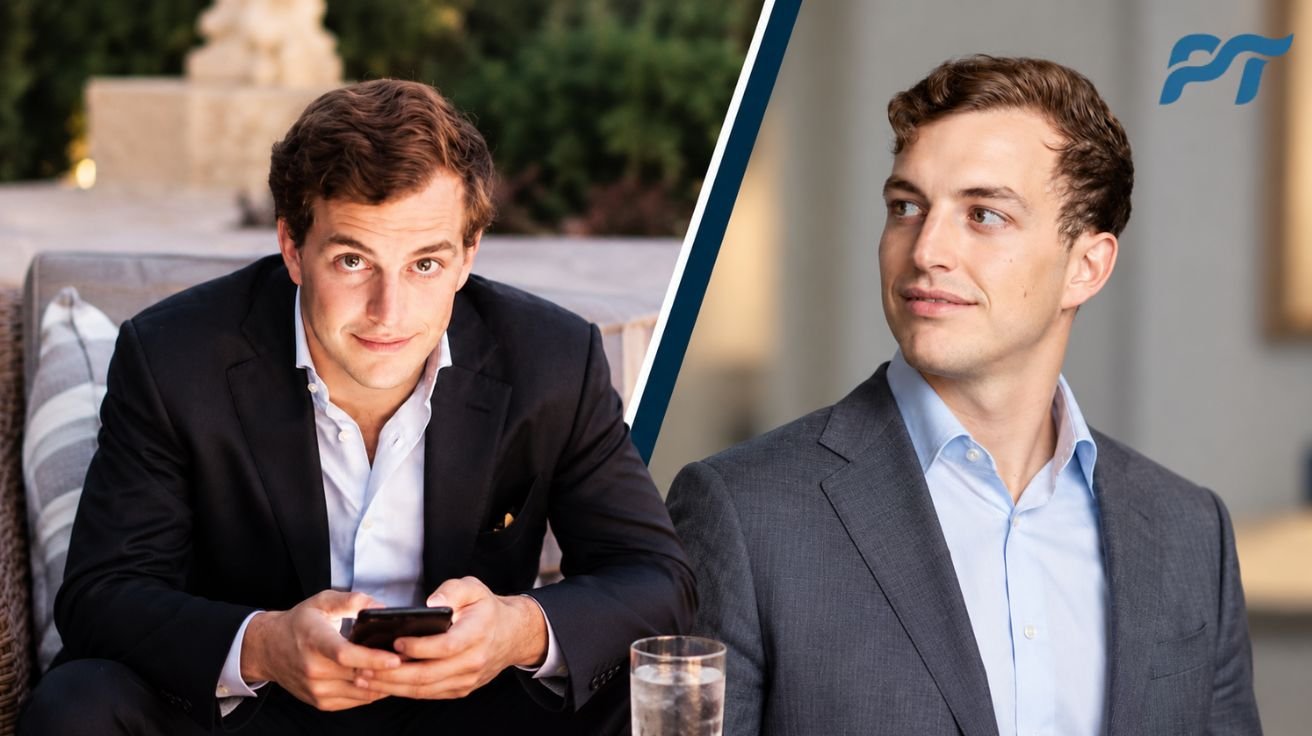
At just 33 years old, Zachary Witkoff has moved from developing luxury hotels for his family’s real estate business to leading a cryptocurrency company involved in multibillion-dollar transactions. As the co-founder and CEO of World Liberty Financial and chairman of AI Financial Corporation (NASDAQ: AIFC), he operates at the intersection of private investment, digital finance, and American politics.
His rise has been closely tied to the Trump family, whose relationship with the Witkoffs stretches back decades. Since 2024, Zachary has helped develop the USD1 stablecoin, pursued international financial partnerships, and participated in efforts to establish a federally regulated digital-asset trust bank. These ventures have brought commercial opportunities alongside questions about corporate ownership, political influence, and financial regulation. His career offers an interesting example of how established real estate wealth is moving into the rapidly changing world of cryptocurrency.
Quick Facts
| Field | Details |
|---|---|
| Full Name | Zachary David Witkoff |
| Popular Name | Zach Witkoff |
| Date of Birth | May 21, 1993 |
| Age | 33 years old (October 2026) |
| Nationality | American |
| Education | University of Miami, B.S. in Business Administration |
| Father | Steve Witkoff |
| Mother | Lauren Rappoport Witkoff |
| Siblings | Alex Witkoff and the late Andrew Witkoff |
| Wife | Sophi Knight (married in 2022) |
| Children | Two sons, Don James and Theodore Andrew |
| Major Business Roles | CEO of World Liberty Financial; President of Witkoff Capital; Chairman of AI Financial Corporation |
| Social Media | X: @ZachWitkoff; LinkedIn: Zachary Witkoff |
Early Life, Education, and the Witkoff Family
Zachary Witkoff was born on May 21, 1993, into a prominent New York real estate family. His father, Steve Witkoff, established the Witkoff Group in 1997, building a property business with interests in residential buildings, luxury hotels, and commercial developments. His mother, Lauren Rappoport Witkoff, also developed a career in real estate, previously working as an attorney before becoming Executive Vice President of Sales and Marketing at the family business.
The family’s professional background placed Zachary close to an industry built on financing, negotiations, and long-term investments. Steve Witkoff began his career as a real estate attorney and developed a relationship with Donald Trump during the 1980s. That friendship later became an important connection between the Witkoff and Trump families, eventually extending into business partnerships involving their children.
Zachary attended the University of Miami, graduating cum laude in 2015 with a Bachelor of Science in Business Administration, concentrating in real estate. His education included the financial and commercial principles used in property investment and development. In December 2021, he joined the Miami Herbert Real Estate Advisory Council, connecting his professional experience with the university’s real estate education and industry network.
Brothers Alex and Andrew Witkoff
Zachary has two older brothers, Alex Witkoff and the late Andrew Scott Witkoff. Alex serves as CEO of the Witkoff Group, overseeing the family’s real estate operations and development activities. He has also participated in cryptocurrency ventures alongside Zachary, including World Liberty Financial.
The family experienced a devastating loss on August 14, 2011, when Andrew died from an opioid overdose at age 22. His death became an enduring part of the Witkoff family’s personal history and contributed to its interest in addiction awareness and alternative treatments for pain.
Wife Sophi Knight and Their Children
Zachary married Sophi Knight, a Canadian model and actress, in April 2022. Their wedding took place at Mar-a-Lago in Palm Beach, Florida, with prominent guests from real estate, entertainment, and politics. Donald Trump and Melania Trump attended the celebration, reflecting the friendship between the families.
The couple welcomed their first son, Don James Witkoff, in December 2024, naming him in honor of Donald Trump. Their second son, Theodore Andrew Witkoff, was born on August 14, 2026, exactly fifteen years after Andrew Witkoff’s death. Theodore’s middle name honors his late uncle, giving the date particular meaning for the family.
From Luxury Real Estate to Witkoff Capital
Before entering cryptocurrency, Zachary Witkoff built his career in property finance and luxury hospitality development. His early professional experience included work in the real estate group at Wells Fargo and at the Ian Schrager Company. These positions exposed him to institutional financing and hospitality projects outside his family’s business.
Ian Schrager is recognized for helping establish the modern boutique-hotel concept, combining hospitality with architecture, design, and lifestyle experiences. The connection became especially relevant when the Witkoff Group worked with Schrager on the PUBLIC Hotel in Manhattan, a project Zachary later helped bring to completion.
At the Witkoff Group, Zachary became Executive Vice President of Development, helping oversee major projects, particularly on the West Coast. His responsibilities included the West Hollywood EDITION, a luxury development with approximately 190 hotel rooms and 20 branded residences, designed by architect John Pawson. He also played an important role in opening the 370-room PUBLIC Hotel on New York’s Lower East Side.
These properties required the coordination of real estate investment, hospitality operations, branding, and financing. While hotel development differs substantially from cryptocurrency, both industries depend on access to capital, partnerships, asset management, and the ability to execute complex commercial projects.
Building an Investment Career at Witkoff Capital
In January 2020, Zachary became president of Witkoff Capital, a Miami-based family investment business. Its activities extend beyond conventional real estate into financial technology, blockchain, property technology, and consumer companies. This position broadened his responsibilities from individual development projects to investments across different business sectors.
The progression helps explain his eventual move into digital finance. Real estate development had given him experience dealing with capital-intensive projects and institutional partners, while private investing introduced him to younger technology companies. Cryptocurrency subsequently provided a different market in which he could apply those commercial relationships and investment interests.
Zachary Witkoff’s Main Business Ventures
| Business | Position | Industry | Major Achievement |
|---|---|---|---|
| Witkoff Group | Executive Vice President of Development | Real estate and hospitality | West Hollywood EDITION and PUBLIC Hotel |
| Witkoff Capital | President since 2020 | Private investment | Investments across property and technology |
| World Liberty Financial | Co-founder and CEO since 2024 | Cryptocurrency and stablecoins | Launch of USD1 |
| AI Financial Corporation | Chairman since August 2025 | Fintech and digital assets | $1.5 billion financing transaction and Nasdaq ticker AIFC |
World Liberty Financial and the Rise of USD1
Zachary’s most prominent business venture began in 2024, when he helped establish World Liberty Financial (WLFI). The cryptocurrency company brought together Eric Trump, Donald Trump Jr., Barron Trump, Alex Witkoff, and cryptocurrency entrepreneurs Zak Folkman and Chase Herro. The business initially emphasized decentralized finance, a system that uses blockchain networks and software protocols to provide financial services.
As CEO, Zachary became one of the company’s leading public representatives. World Liberty Financial introduced the $WLFI governance token, which has a total supply limit of 100 billion tokens, before expanding its attention toward stablecoins and institutional financial infrastructure. The venture combined cryptocurrency technology with established networks of investors, business executives, and political figures.
A defining development arrived in March 2025, when World Liberty Financial introduced USD1, a digital asset designed to maintain a value of one U.S. dollar. Unlike the governance token, USD1 is intended for transactions, payments, and settlement. Its reserves consist of U.S. dollar assets and eligible government-backed financial instruments, with BitGo providing issuance, redemption, custody, and associated technical services.
How USD1 Compares With USDT and USDC
USD1 entered a stablecoin market already dominated by Tether’s USDT and Circle’s USDC. All three aim to maintain dollar parity, but their issuing arrangements, reserve structures, distribution networks, and commercial histories differ. For USD1, the challenge is not simply keeping its price close to one dollar. It must also become convenient for exchanges, merchants, financial institutions, and payment providers to use.
| Feature | USD1 | USDT | USDC |
|---|---|---|---|
| Associated Company | World Liberty Financial | Tether | Circle |
| Issuer | BitGo | Tether entities | Circle entities |
| Target Value | $1 | $1 | $1 |
| Reserve Model | Dollar assets and U.S. government money market instruments | U.S. Treasuries, cash equivalents, and other reserve assets | Cash, short-term Treasuries, and Treasury repurchase agreements |
| Market Position | Newer institutional and payment-focused stablecoin | Established leader in crypto trading liquidity | Established stablecoin with significant institutional payment infrastructure |
| Main Commercial Challenge | Expanding adoption and distribution | Maintaining transparency and global regulatory access | Growing institutional and payment adoption |
USDT benefits from extensive trading liquidity, particularly across international cryptocurrency exchanges. USDC has developed strong institutional infrastructure, including reserve disclosures and connections with regulated financial institutions. USD1 is pursuing a different growth strategy involving major settlement transactions, financial partnerships, and a proposed national trust bank.
The business model also deserves attention. Reserve assets can generate interest income while token holders retain digital dollars rather than interest-paying bank deposits. For a stablecoin issuer, this means circulating supply and the composition of reserves influence potential revenue. However, the amount of USD1 in circulation is not equivalent to Zachary Witkoff’s personal wealth or the value of World Liberty Financial.
The $2 Billion Binance Deal and International Expansion
A major turning point came on May 1, 2025, during the TOKEN2049 conference in Dubai. Zachary announced that USD1 would be used to settle an approximately $2 billion investment by Abu Dhabi-based MGX into Binance, one of the world’s largest cryptocurrency exchanges. The transaction was particularly notable because USD1 had been launched only weeks earlier.
The arrangement quickly brought USD1 into the institutional stablecoin market. Instead of relying entirely on individual cryptocurrency traders, World Liberty Financial was able to demonstrate a use case involving a major international investment. The transaction also attracted scrutiny because of the relationships among the investors, the Trump family, and senior U.S. government officials.
Pakistan’s January 2026 Digital Payment Agreement
Witkoff continued pursuing international partnerships in January 2026, traveling to Islamabad, Pakistan, for meetings concerning digital financial infrastructure. On January 14, he met Prime Minister Shehbaz Sharif and senior officials, including Finance Minister Muhammad Aurangzeb, Field Marshal Syed Asim Munir, and Bilal Bin Saqib, chairman of the Pakistan Virtual Assets Regulatory Authority.
During the visit, Zachary signed a memorandum of understanding on behalf of SC Financial Technologies LLC, an affiliate of World Liberty Financial. The agreement created a framework for exploring digital payment systems, cross-border settlements, and foreign exchange processes. It was a step toward possible cooperation rather than the launch of a fully operational nationwide payment system.
The interest in Pakistan reflects a practical challenge in international finance: transferring money across borders can involve multiple intermediaries, currency conversions, and settlement delays. Dollar-backed stablecoins may help reduce some of those frictions, but meaningful adoption requires local regulatory approvals, reliable conversion into domestic currency, and financial institutions willing to support the service.
Expanding USD1 Into Everyday Payments
World Liberty Financial announced another significant partnership on October 7, 2026, during TOKEN2049 Singapore. The company joined forces with Mesh, a payment infrastructure provider connecting cryptocurrency wallets, exchanges, and merchants. Zachary participated in the announcement alongside World Liberty Financial co-founder Zak Folkman and Mesh CEO Bam Azizi.
The partnership aims to make USD1 spendable across Mesh’s merchant network, with an initial rollout targeted for the fourth quarter of 2026. This represents a different stage of development from the MGX transaction. Large institutional settlements can create substantial stablecoin demand, but recurring consumer and merchant payments could demonstrate whether the asset has lasting usefulness beyond a small number of major deals.
Success will depend on more than signing partnerships. Merchants need smooth checkout experiences, predictable conversion costs, reliable settlement, and straightforward accounting. USD1 must offer sufficient convenience for payment providers to support it alongside established alternatives. These operational factors will help determine whether its expansion into everyday commerce becomes commercially meaningful.
AI Financial Corporation and the $1.5 Billion Treasury Strategy
In August 2025, Zachary expanded into the public financial markets by becoming chairman of ALT5 Sigma Corporation, a Nasdaq-listed financial technology company. His appointment accompanied a $1.5 billion registered direct offering and concurrent private placement intended to support a substantial cryptocurrency treasury strategy.
The financing combined two different forms of consideration. One portion involved cash raised through the sale of securities, while the concurrent private placement involved approximately $750 million in $WLFI tokens. The structure was designed to give the company holdings representing approximately 7.5% of the token’s total supply.
The leadership changes also included Eric Trump, whose initial appointment to the board was subsequently adjusted to a non-voting observer role, and Zak Folkman, who participated in the company’s governance arrangements. These appointments strengthened the connections between the publicly traded company and World Liberty Financial.
Payment Infrastructure and Corporate Restructuring
ALT5 operated financial technology platforms including ALT5 Pay and ALT5 Prime. The first focuses on cryptocurrency payment processing, while the second supports institutional trading and settlement. These businesses provide operating activities separate from the company’s digital-asset treasury holdings.
On April 29, 2026, ALT5 Sigma began trading under its new corporate identity, AI Financial Corporation (NASDAQ: AIFC), replacing its former ticker ALTS. The rebranding reflected ambitions involving blockchain payments, tokenization, and emerging financial infrastructure.
The treasury arrangement carries both opportunities and risks. Holding a substantial supply of $WLFI tokens can give shareholders indirect financial exposure to that asset, but it also connects the company’s balance sheet to cryptocurrency market volatility. The value of its digital assets can change even when its payment-processing business continues operating.
Drew Therapeutics and a Personal Family Tribute
AI Financial’s corporate structure also included a biotechnology business, previously known as Alyea Therapeutics. On October 14, 2026, the company announced that the biotechnology operation would be renamed Drew Therapeutics Corporation in memory of Zachary’s late brother, Andrew Witkoff.
The business focuses on developing non-addictive pain treatments, including therapies intended to reduce reliance on conventional opioids. AI Financial has also outlined plans to separate the biotechnology operation into an independent publicly traded company.
The decision connected two otherwise different parts of the business. AI Financial’s core financial technology strategy centers on digital payments and treasury holdings, while Drew Therapeutics represents a biotechnology operation with its own clinical and commercial objectives. The new name provided a personal connection between the subsidiary’s work and the Witkoff family’s experience with opioid addiction.
World Liberty Trust Company and Federal Banking Regulation
One of Zachary Witkoff’s most ambitious projects involves World Liberty Trust Company, National Association, a proposed national trust bank intended to provide digital-asset custody, stablecoin issuance, redemption, and related services. The application was submitted in January 2026, with plans to establish the institution in Bay Harbor Islands, Florida.
On August 14, 2026, the Office of the Comptroller of the Currency (OCC) granted preliminary conditional approval through Corporate Decision No. 1385. The decision identified Zachary as a proposed organizer, director, and president. It also outlined the requirements the institution must meet before receiving final authorization to begin business.
Under the conditions, the proposed bank must maintain at least $20 million in Tier 1 capital. The greater of 50% of its Tier 1 capital or $10 million must be maintained in eligible liquid assets, alongside a separate liquidity reserve sufficient to cover 180 days of operating expenses. The institution must also satisfy compliance, governance, security, and supervisory examination requirements.
What the Banking Approval Means for USD1
A national trust bank would provide a different operating structure from the one World Liberty Financial currently uses for USD1. If the proposed institution receives final authorization and completes the necessary transition, it could assume responsibilities for stablecoin issuance and reserve custody, functions currently performed through BitGo.
The proposed bank would not operate like a conventional consumer bank offering ordinary checking accounts, personal loans, and federally insured retail deposits. Its permitted activities would concentrate on trust services, digital-asset custody, and related financial operations. Conditional approval therefore marks an important regulatory milestone, but not the beginning of full banking operations.
The decision also creates measurable deadlines. The organizing group generally must raise the required capital within 12 months of the approval date and open within 18 months, subject to the OCC’s requirements. For Witkoff, the critical challenge is moving from a proposed charter to a functioning institution with effective risk controls, dependable technology, and institutional customer confidence.
Political Connections, Ownership, and Financial Scrutiny
Zachary Witkoff’s business activities have drawn increased attention because of the ownership and political relationships surrounding World Liberty Financial. His father, Steve Witkoff, serves in a senior diplomatic role under President Donald Trump, while the cryptocurrency company maintains financial connections with the Trump family and international investors.
World Liberty Financial’s corporate arrangements include significant economic rights for Trump-affiliated entities, including rights to 75% of certain net $WLFI token-sale proceeds. This structure has prompted debate about whether the company’s relationships with investors could create conflicts between private financial interests and government responsibilities.
The controversy intensified in early 2026 following disclosures about a $500 million investment for a 49% stake in World Liberty Financial involving Aryam Investment 1, an investment vehicle associated with UAE national security adviser Sheikh Tahnoon bin Zayed Al Nahyan. The investment attracted attention alongside the earlier $2 billion MGX transaction involving USD1.
Congressional Questions and the October 2026 Lawsuit
On February 4, 2026, Representative Ro Khanna, the ranking Democratic member of the House Select Committee on the Chinese Communist Party, sent Zachary Witkoff an information request about World Liberty Financial. The inquiry sought documents concerning ownership, investors, financial arrangements, and possible connections with U.S. technology policy.
The letter raised questions involving advanced semiconductor export approvals and the October 2025 pardon of Binance founder Changpeng Zhao. These questions concerned possible conflicts of interest and foreign influence; they did not establish that Witkoff or World Liberty Financial had improperly influenced government decisions.
A separate legal development followed on October 22, 2026, when J. Benjamin Greenberg, a shareholder of Circle Internet Group, filed a lawsuit involving Donald Trump, World Liberty Financial, Steve Witkoff, and affiliated entities. The complaint alleged constitutional violations connected to UAE-linked cryptocurrency transactions and their possible effects on Circle, the company behind the competing USDC stablecoin.
World Liberty Financial and White House representatives rejected the allegations of wrongdoing. Circle also stated that it had not initiated or participated in the shareholder’s lawsuit.
These developments matter commercially because banks, payment companies, and institutional investors evaluate governance and reputational exposure before entering long-term relationships. For World Liberty Financial, maintaining institutional credibility will depend on transparent financial arrangements, compliance with regulatory requirements, and how ongoing disputes are resolved.
Understanding Zachary Witkoff’s Financial Interests
Zachary’s financial career includes executive positions in real estate development, private investment, cryptocurrency, and public financial technology. Each operates under a different financial structure. Property assets may generate development profits or rental income, while private investments can create returns through ownership stakes and business growth.
World Liberty Financial has additional economic arrangements involving token sales, protocol revenue, and stablecoin operations. AI Financial Corporation maintains an operating payments business alongside exposure to digital assets through its treasury strategy.
The distinction between company transaction volume, corporate valuation, token holdings, and personal net worth is especially important. A $2 billion transaction settled using USD1 represents the scale of a financial arrangement; it does not mean that the amount became Zachary Witkoff’s personal income. His professional financial influence is better understood through the businesses he manages and the commercial agreements they operate.
Zachary Witkoff’s Social Media and Public Presence
Zachary maintains a professional presence on X under @ZachWitkoff, where he shares developments concerning World Liberty Financial, USD1, financial technology, and business partnerships. His public communications often coincide with industry conferences, product announcements, and significant developments involving cryptocurrency regulation or institutional adoption.
He also has a professional presence on LinkedIn, reflecting his business and educational background. Outside social media, he has appeared at major international events, including TOKEN2049 Dubai and Singapore, as well as public business and political gatherings. These appearances reflect a professional network spanning real estate, digital finance, and American political circles.
Interesting Facts About Zachary Witkoff
- His father’s friendship with Donald Trump began over a sandwich. In 1986, Steve Witkoff paid for Trump’s ham-and-Swiss sandwich at a New York deli, an encounter that became part of the families’ longstanding relationship.
- He spoke at the 2024 Republican National Convention. Zachary appeared on stage in Milwaukee, discussed his family’s friendship with Donald Trump, and introduced his father, Steve Witkoff.
- He helped ring the Nasdaq opening bell. On August 13, 2025, Zachary joined Eric Trump and other business executives for a Nasdaq ceremony connected to ALT5 Sigma’s cryptocurrency treasury strategy.
- His cryptocurrency company helped pay UFC fighter bonuses. During UFC Freedom 250 in June 2026, World Liberty Financial contributed $250,000 in USD1 to fighter performance bonuses at the White House event.
- He participated in political fundraising. In October 2025, Zachary and Sophi Knight were involved in hosting a Kentucky fundraising event for U.S. Senate candidate Nate Morris, with Vivek Ramaswamy among the prominent participants.
Conclusion
Zachary Witkoff’s business career reflects an unusually rapid move from traditional property development into digital finance. His experience at Wells Fargo, the Ian Schrager Company, the Witkoff Group, and Witkoff Capital preceded his leadership of World Liberty Financial and AI Financial Corporation. By October 2026, he had helped establish a dollar-backed stablecoin, participated in major international transactions, and pursued a national trust bank structure that could change how USD1 is issued and managed. His family background and longstanding connections with the Trump family have remained central to his public profile, particularly as his businesses have attracted financial and political scrutiny.
The next stage of his career will depend on outcomes rather than announcements alone. World Liberty Trust Company must satisfy its remaining regulatory conditions, while USD1 must prove that it can compete in a stablecoin market dominated by established issuers. AI Financial also faces the challenge of balancing digital-asset exposure with sustainable operating performance. At 33 years old, Witkoff has substantial commercial responsibilities, but his long-term reputation will depend on execution, transparent governance, and whether his companies establish enduring roles in the financial system.
FAQs
How is Zachary Witkoff connected to Donald Trump?
Zachary Witkoff co-founded World Liberty Financial with Trump’s family. His father, Steve Witkoff, is also a longtime Trump associate.
What is Zachary Witkoff’s main business?
He is best known as CEO of World Liberty Financial, the cryptocurrency venture behind the dollar-backed USD1 stablecoin.
What is the USD1 stablecoin?
USD1 is a dollar-backed digital asset associated with World Liberty Financial, designed for payments and settlement at a $1 value.
Why has World Liberty Financial faced political scrutiny?
World Liberty Financial has faced questions about foreign investment, Trump family ownership, and potential government conflicts of interest.
What is Zachary Witkoff’s role at AI Financial Corporation?
Zachary Witkoff chairs AI Financial Corporation (NASDAQ: AIFC), a company involved in digital payment infrastructure and crypto treasury holdings.